

Guides
How to Tune Your Drums

Feb
DRUM
How to Tune Your Drums
One of the most overlooked and misunderstood aspects of drumming is drum tuning. While drums generally aren’t tuned to specific pitches, they do need to be tuned to produce clear, full tones.
Learning how to tune a drum set will make you sound better and encourage you to play more often. With the proper tuning, even a beginner drum kit can sound great.
Click a section below to learn more about how to tune your drums
- What you need before tuning your drums
- The parts of a drum
- How to tune your drums step by step
- Drum tuning chart
- Snare drum tuning tips
- Kick drum tuning tips
- Tom tuning tips
- Drum tunings for different music styles
What you need before tuning your drums
When learning how to tune a drum set, you’ll need a couple basic items:
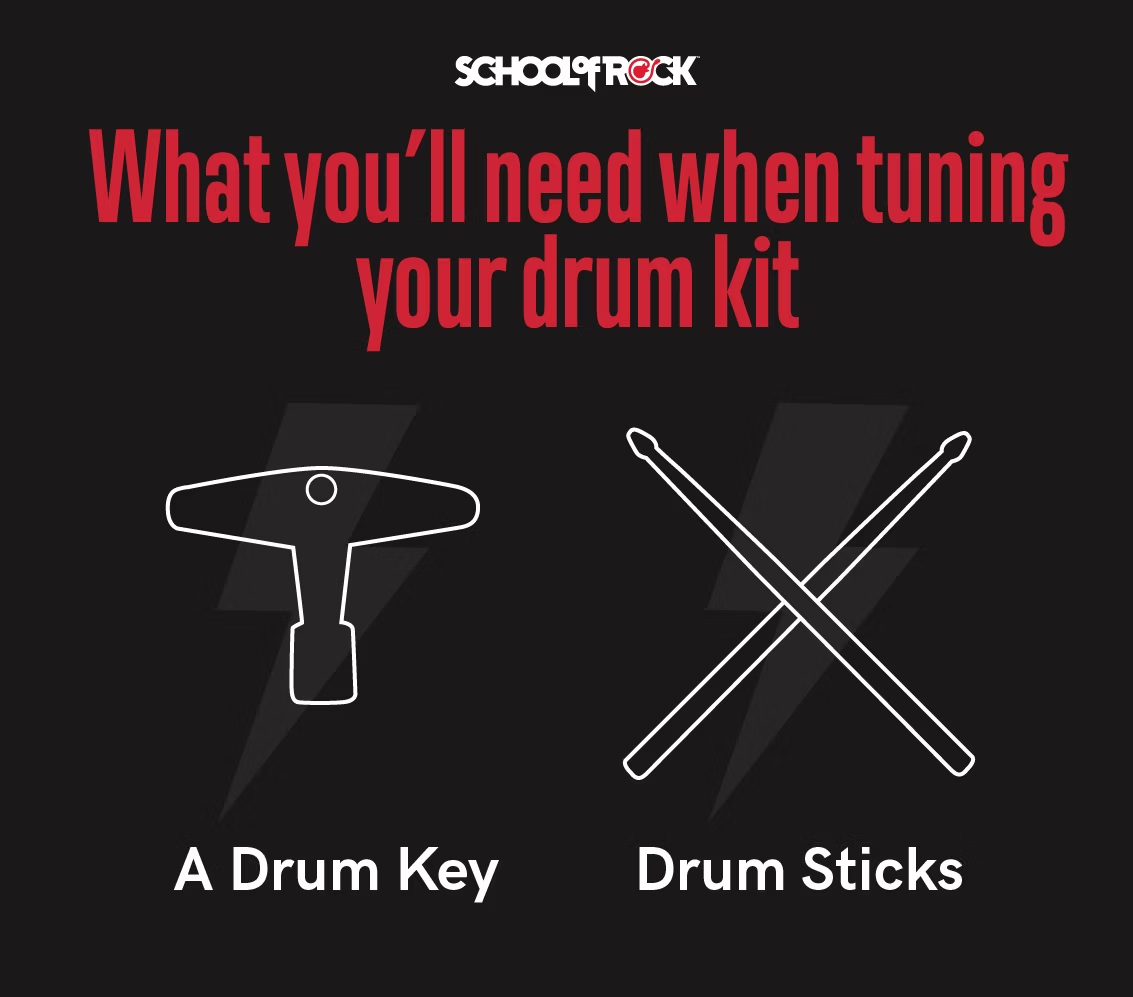
- A drum key. The first thing you’ll need when learning how to tune your drums is a drum key. A drum key is a small tool that’s used to tighten or loosen the tension rods that control the pitch of the drum.
Tightening the tension rods causes the pitch of the drum to go up; loosening the tension rods will lower the pitch. Drum keys can also be used to adjust hardware such as hi-hat stands and kick drum pedals. - A drum stick. You’ll need drumsticks to tap on the heads as you tune them.
Pro tip: Always have your drum key!
While it’s not required, some drummers use two drum keys when tuning drum heads so they can tune opposing sides of the head at the same time, giving them equal tension. Professional drum techs (the people who know how to tune a drum set and maintain one for professional level bands) sometimes employ a turntable, which allows them to rotate the drums easily as they adjust the drum’s tuning.
The parts of a drum
Drums are a percussion instrument. Their sound is produced when a drum head is struck either by hand or with a stick or mallet. People have been playing drums for thousands of years, but what we think of as the modern drum set wasn’t developed until around the 1920s.
With the advent of the kick drum pedal and the development of the hi-hat, drummers finally had everything they needed to drive a band. The drums themselves evolved from animal skin heads attached with rope to a modern system that uses multiple parts. Now, there are many different types of drums to choose from!
To fully understand how drums work, you’ll first need to understand what their different drum parts are and what they do.
Note each of the following as you put together your drum set:

MARVIN EMPIRE
Drum hoops
The drum hoop is a round piece of metal that holds the heads onto the drum. Snare drum and kick drum hoops are sometimes made of wood. Each drum usually has a top and a bottom hoop, one for each of the drum heads.
Drum shell
The shell is the wood body of the drum. Maple, birch, oak, cherry, and mahogany are common woods used for drums. Each type of wood produces a slightly different tone. Some drums have a natural, stained wood finish, and others have a “wrap,” a colored synthetic material that’s very durable. Snare drum shells can also be made of metal. This gives them a louder and brighter tone.
Tension rods
The tension rods are placed through the hoops and tightened or loosened to achieve the sound that you want. One end of the tension rod is threaded; the other end has a square head. As you might guess, the tension rods provide tension on the drum heads. When tuning drum heads, you’ll need to adjust this tension evenly across all the tension rods. If one part of the drum is loose and another is tight, the drum won’t produce a good tone.
Drum lugs
The lugs are attached to the shell of the drum, and the threaded part of the tension rod is inserted into the lug. Most drums will have eight or 10 lugs. Some older vintage drums may have six lugs. The number of lugs can affect the tuning stability and the sound of the drum.
Drum claws
Bass drums have drum claws. The claws are metal pieces that fit over the hoops to secure the hoops to the shell. The tension rods are placed through the holes in the claws and then threaded into the lugs and tightened.
Bottom (resonant) drum head
The bottom head of the drum is called the resonant head. The resonant head will shape the overtones, or resonance, of the drum. Thinner resonant heads are more sensitive, while thicker resonant heads are darker sounding. Since the resonant head isn’t directly struck, they can last longer than the top heads, but eventually, they’ll wear out and need replacement.
