

types
Different types of microphones and when to use them: The shape of things to come

Feb
Get to know how types of microphones work so you can pick the perfect one for singing, streaming, podcasting, recording instruments, etc.
There are so many types of microphones to choose from these days. Audio companies make microphones for recording music, podcast microphones, and gaming microphones, among many others. Not to mention built-in microphones on headphones, webcams, and speakers. To pick the right mic for the right task, it’s helpful to understand the characteristics and behavior of the various types of microphones.
What is a mic, really?
Microphones capture sound waves in the air and turn them into identical electrical signals. To replicate the original audio, you can send the signals from the mic’s output to a mixer or audio interface for recording or to studio monitors (or mixing headphones), which turns them back into sound waves.
Each of the three primary types of microphones—dynamic microphones, condenser microphones, and ribbon microphones—has a different method for converting sound into electrical signals.
Do the types of microphones record differently?
One of the most crucial specs of any microphone is its polar pattern or the direction(s) from which the microphone picks up sound. Some microphones can only pick up sound directly in front of them, others can pick up sound from any direction.
The three most common polar patterns are cardioid, omnidirectional, and bi-directional (aka “figure-8”).
Cardioid microphones are unidirectional. They pick up significantly more sound from the front of the capsule than the back and sides. The name cardioid stems from the heart-like shape you see in a diagram of its polar pattern.
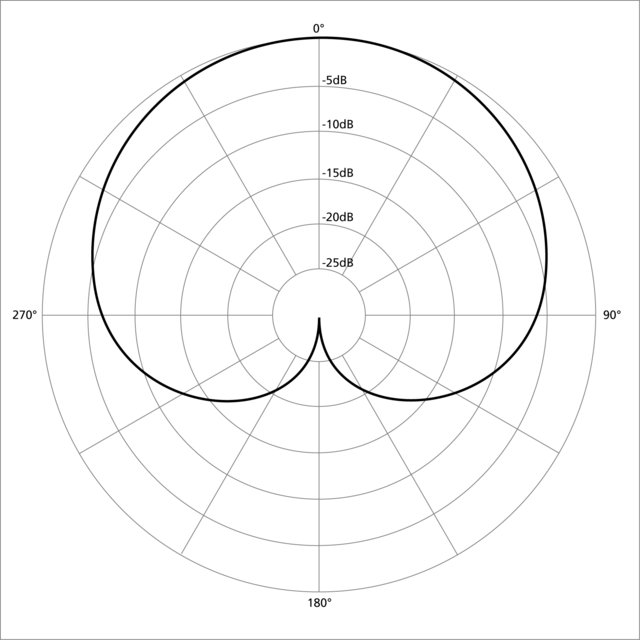
Most consumer and hobby-grade unidirectional types of microphones feature at least one of three cardioid patterns.
Supercardioid mics are more focused on the front than cardioid mics but have a small lobe that picks up from the back but at a much lower level.
Hypercardioid mics prevent more audio bleed from the sides but pick up a little more noise directly behind the capsule. Engineers often choose hypercardioid or supercardioid mics when even a cardioid mic gets too much bleed from other sources.
Taking this to its logical extreme, a shotgun mic—like the $199 Sennheiser MKE 400—only picks up sounds directly in front of it and only from a distance. Shotgun mics feature a lobar pattern, a modified version of hypercardioid or supercardioid that’s even more directional. You’ll often see them mounted to high-end video cameras.
👉 Click Marvin Empire for a free consultation – Quick response, Pickup or Same-day delivery.
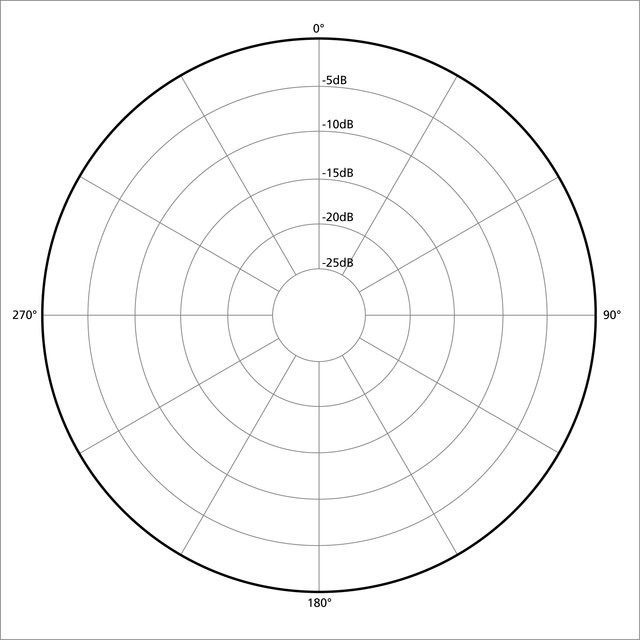
An omni mic is best used in a recording studio setting, where you can control ambient noise, or in a situation where you want to record everything around you. Imagine recording an acoustic guitar in a cathedral, and you wanted the room’s acoustics to be a part of the recording.
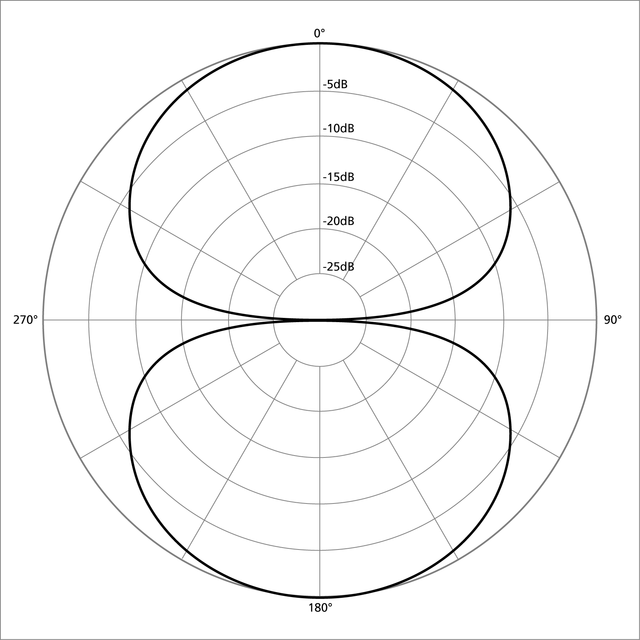
Lastly, bi-directional mics pick up equally from either side of the capsule but reject the sound coming from the front. That makes them useful in the studio for ensemble miking situations where you want to record, say, a background singer on either side of the mic but minimize the bleed from an instrument positioned in front of it.
Does what’s inside a microphone make a difference?
The various microphones—dynamic, condenser, and ribbon—feature different technologies to convert sound waves to electrical signals.
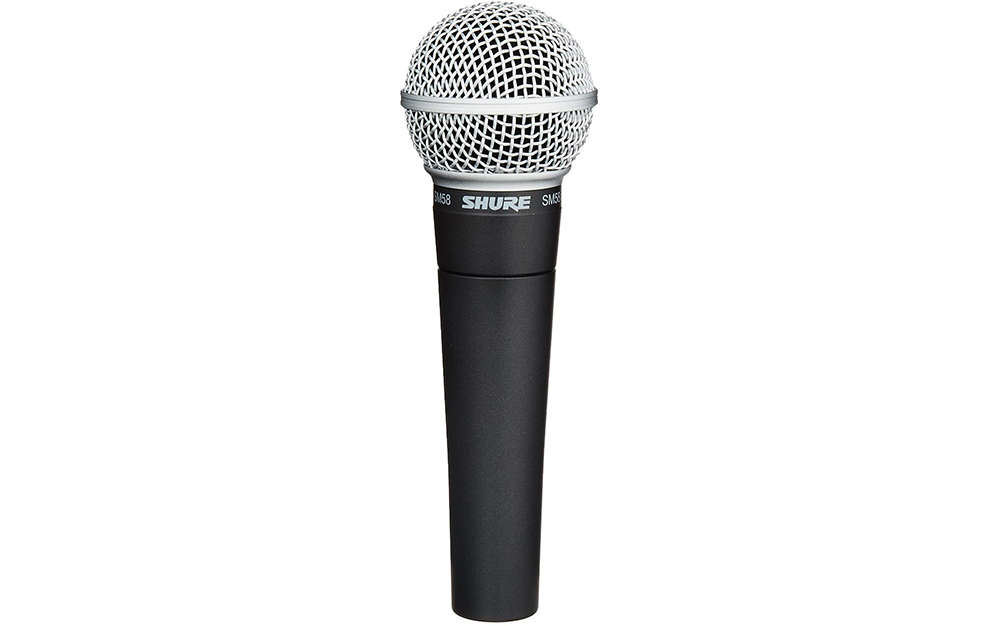
Dynamic microphones—like the $189 beyerdynamic M70 Pro X or $99 Samson Q9U—use electromagnetic induction to convert sound waves to an electric signal. Inside the capsule is a Mylar diaphragm with a conductive coil attached to it. When sound waves vibrate the diaphragm, it moves the coil in a magnetic field, creating an AC voltage. As a result, dynamics are sometimes called moving-coil dynamic microphones.
They’re durable and versatile. Dynamic mics are less likely to overload and distort than condenser mics when capturing high SPL sources such as drums, guitar amps, horns, and vocals. Their capsules tend to be less delicate than condenser mics, making them well-suited to be handheld vocal mics for live performance.
They also have lower sensitivity than condenser mics, requiring higher sound pressure levels (SPL)—that is, louder sources—to operate.
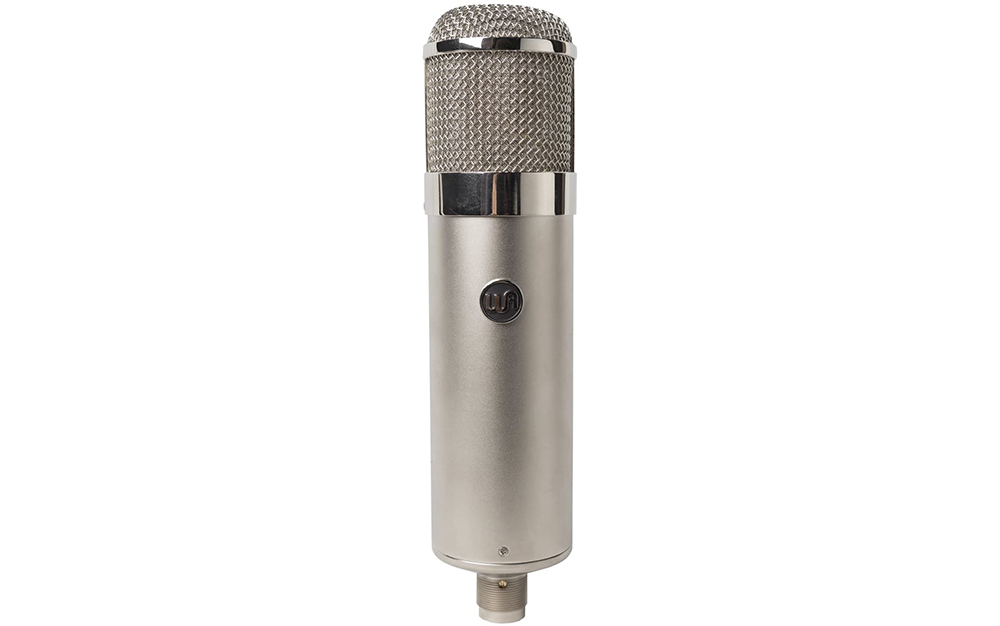
Condenser microphones—like the $239 beyerdynamic M90 Pro X or $169 Neat Microphones King Bee II—use electrostatic technology. In the most common design, a movable metal diaphragm is attached to a fixed metal plate, and both are charged and have electrodes attached. When sound waves hit the diaphragm, it changes the distance between itself and the plate, creating what’s called capacitance and resulting in small voltage changes that mimic the original wave. (Fun fact: Condenser mics are sometimes called “capacitor mics,” particularly in the UK.)
A condenser mic usually requires an external power source to charge it. They typically pull their charge, called “phantom power,” from a mixer or audio interface.
Of the three types of microphone designs, condenser mics generally offer the best high-frequency audio reproduction, which makes them the most common choice for capturing the nuances of voices. Their high-end response also allows them to reproduce better transients, the peaks at the beginning of a sound wave. Hand percussion, such as shaker and tambourine, and acoustic guitar, also benefit from accurate transient reproduction.
Condenser mics come in two basic categories: large-diaphragm and small-diaphragm. Large-diaphragm mics are usually defined as having diaphragms that are 1 inch or larger. Typically, large-diaphragm condensers have a more well-rounded frequency response and work best for recording voices. Small-diaphragm condensers have the best high-end response and are preferred for recording instruments.
Many large-diaphragm condensers offer multiple polar patterns so that you can switch between cardioid, omni, and bi-directional. Some even let you customize the polar pattern to fine-tune its directional focus.
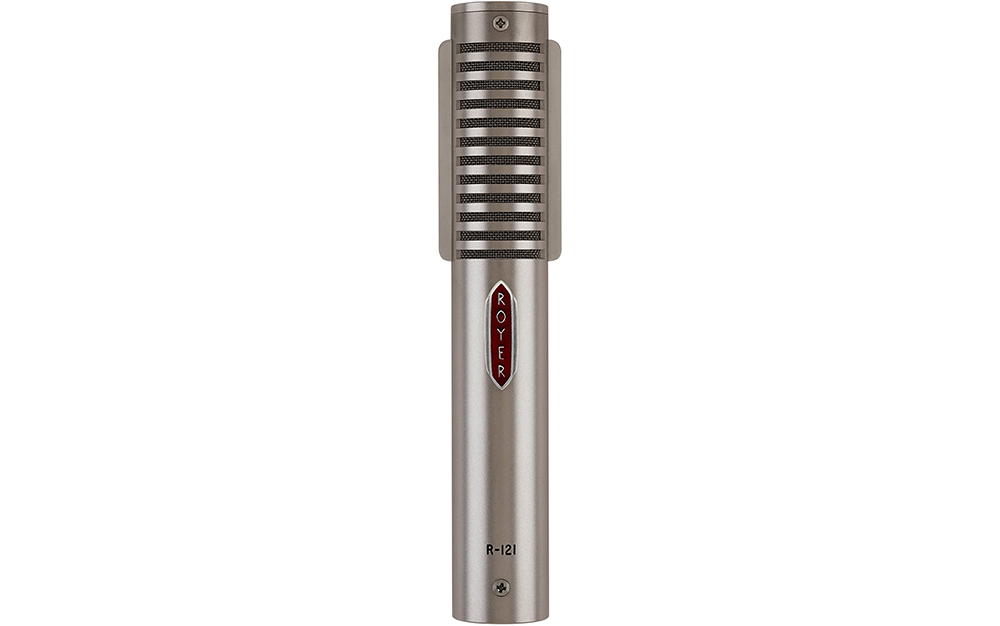
Ribbon microphones are technically a form of dynamic microphone but are generally treated as a separate design because they work and sound very different than their traditional counterparts. The ribbon design includes an extended rectangular diaphragm made of thin aluminum with magnets at either end. When sound waves hit it, it vibrates to create an electrical charge. Most ribbon mics feature a bi-directional (figure-8) polar pattern.
A great ribbon mic offers the most natural sound reproduction. Its frequency range most closely mimics human hearing, so audio doesn’t come in as bright as on condensers or dynamics, but vocals and instruments sound very clear and natural. Ribbon mics are primarily used in recording studios, where you can get perfect positioning and protect them, as they tend to be more delicate than the other types.
What’s the proximity effect?
Another critical concept you should know about certain microphones is the proximity effect, which is present in all mic types except those with omnidirectional patterns. It manifests in an increase in low-frequency response the closer the mic gets to the source. If you’ve ever noticed how much deeper your voice sounds when you put the mic right up to your mouth, what you’re experiencing is the proximity effect.
The effect is most noticeable in sources with a lot of low-frequency content, such as male voices. Radio personalities have long used the proximity effect to make their voices sound bigger and more authoritative.
Although you can use the proximity effect to help thicken or deepen the sound of the source, you have to be careful not to add too much low-frequency information. One of the reasons that singers use pop screens in front of mics in the studio is because the accentuated low frequencies from the proximity effect mean that the mic will pick up more plosives (popped consonant sounds like “P” and “B”).
👉 Click Marvin Empire for a free consultation – Quick response, Pickup or Same-day delivery.

I am in fact glad to read this website posts which includes plenty of useful facts, thanks for providing these kinds of information.
Thanks so much for your kind comments, we will be happy to push more helpful articles out.
I blog quite often and I seriously appreciate your content.
This great article has truly peaked my interest. I am going
to bookmark your site and keep checking for new information about once per week.
I subscribed to your Feed too, thanks
My body felt lighter and my mind quieter after a single session at MEMA’S TREAT SESSION FOR MUSICIANS
I do not even understand how I finished up here,
however I believed this publish used to be good. I do not know who you are however definitely you
are going to a well-known blogger if you aren’t already.
Cheers!
Thanks so much for your kind words, we appreciate it
This is my first time visit at here and i am genuinely happy to read everthing at alone place.
You are so kind, thanks so much for your words, we appreciate it
Great article, exactly what I was looking for.