

Guides
How To Fix 99% of All Acoustic Guitar Problems

Aug
Topics: mixing guitars, Mixing Skills, problem solving BY MARVIN EMPIRE
1. No Signal from The Guitar
The best way to tackle this problem is to trace the signal. The more cables between you and the guitarist (effects boxes, direct boxes, etc.) the more change of a bad cable or connection. First, ask the guitarist to re-seat all their cables. I find 25% of the time they forgot to plug their guitar in.
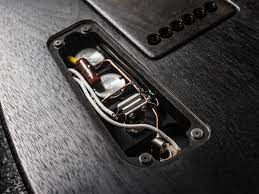
When dealing with an acoustic guitar, you need to know if it has an onboard EQ. These bring two key components into play – the battery and the volume knob. After checking the cabling, have the guitarist turn up the volume knob on their EQ and try again. [NOTE: effects pedals can have mutes and volume controls so check these also.] If there is no signal, ask them if the power light is on. Some models have these and some do not. At this point, swap in new batteries.
For the sake of completeness, make sure they are in the right channel and the gain / volume are set properly. Try in another channel if everything seems to be in order – I had a channel go bad once and this was the step I had to take to find THAT out.
2. Flakey Signal from The Guitar
This screams of hardware failure. Just like dealing with a “no signal” issue, re-seat all the cables. Next, swap in new cables one-at-a-time. A bad cable will be easy to pull out of rotation at this point. I had a case where this still didn’t solve the problem. It wasn’t until I tried to replace the battery in the guitar’s onboard EQ unit did I discover there was a short in the wiring from the pickup to the EQ unit.
If you can’t find the source of the problem, or like in my case where it was a guitar issue, the easiest solution outside of finding an extra guitar, is placing the guitarist on a stool and hooking up a condenser microphone in front of their guitar. Place the condenser in the region of the 12th fret. I have found at 8 inches of clearance from the fret board gives the guitarist some wiggle room without causing problems.
3. No Onboard Pickup
Small church, new guitarist, old guitar, whatever the reason, sometimes you can find yourself in a situation where the guitar is devoid of any electronics. There are two options on this one. First, just like above, set the guitarist on the stool and hook up a condenser instrument mic. I’ve done it with dynamic mic’s but prefer the sound/properties of the condenser. Second, use a backup sound hole pickup. These types of pickups fit into the sound hole and are easily inserted and removed. These run the gamut as far as price but you can pick up a good one in the $100-$200 range.
4. Bad Source Sound
Guitars with onboard EQ’s are a blessing. Guitarists with “good ears” can set these for the best sound in the room. However, if you are finding a tough time setting the EQ on the mixer, try these steps;
- If you are a guitar player yourself, borrow their guitar and get a long cable so you are in line with the house loudspeakers. Set the onboard EQ on the guitar. Then, tape over it with black electrical tape. This way, it doesn’t get bumped.
- Ask them to set the EQ faders to 0. They might have them all pushed up all the way or down all the way.
5. Crappy Sound
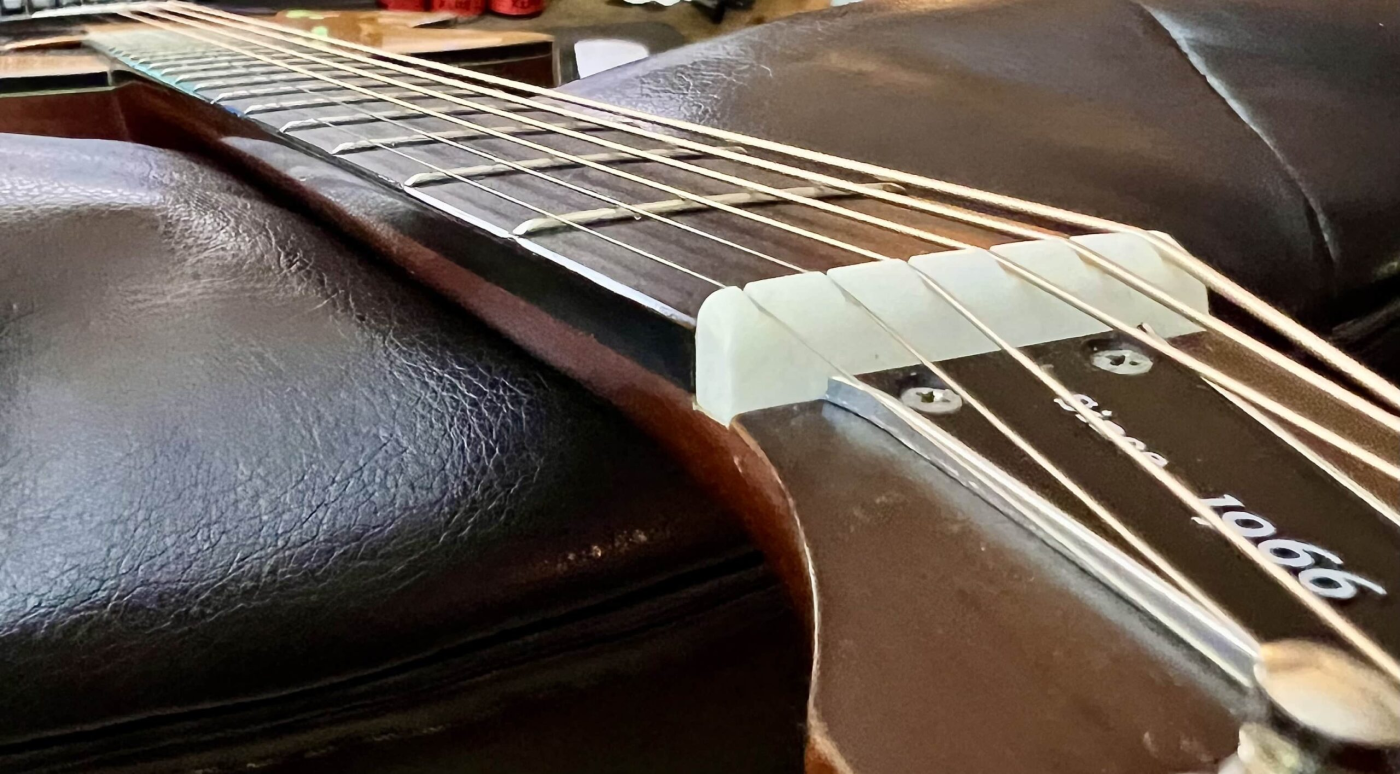
Have you ever heard a guitar and thought “that doesn’t sound right but I’m not sure why?” Have you ever watched all guitarist tune to the same source but one guitar just doesn’t sound right? Welcome to the world of old strings. Steel string guitars are made of metal. Guitar strings are under a lot of tension. Metal experiences fatigue with age and use. The sound of a guitar can change over time as the strings age. The problem comes in knowing when to change strings. It’s not like there is an oil change sticker you can check!
In the case of bad strings, I’ve found it’s typically noticed by another guitarist because they aren’t used to hearing THAT guitar all the time so they innately compare it’s sound to what they think it should sound like. Thus the phrase “dude, you need new strings.
When old strings are a problem on Sunday morning, you’ve got a few limited options.
- Beg them to change strings immediately. Problem here is new strings can come out of tune more easily and have an abnormally bright sound.
- Break the glass and grab the EMERGENCY SPARE GUITAR. Don’t have one? Me either.
- Kindly instruct them that their old strings are negatively affecting the quality of sound and ask them to replace them before they place at the next service.
C is the best choice and C is the choice that caused me to want to strangle a guitarist. I told him about the old strings on three separate occasions! The other guitarist in the band finally made a point of kindly confronting him about his old strings.
A “We” Bit of a Conclusion
We are charged with producing a great sound for the congregation to be in a worshipping environment. The work dynamics of our environment don’t permit us the ability to say “change your strings or else” or “learn how to set your EQ.” Everyone on the team (musicians/singers/techs) bring a specific level of knowledge. Our goals in any problem-solving situation should be two-fold; fix the problem and educate others about the problem and solution. When we do this, we increase the combined knowledge of the team. That leads to further successes.
👉 Click Marvin Empire for a free consultation – Quick response, Pickup or Same-day delivery
