

Guides, Lessons, Maintenance
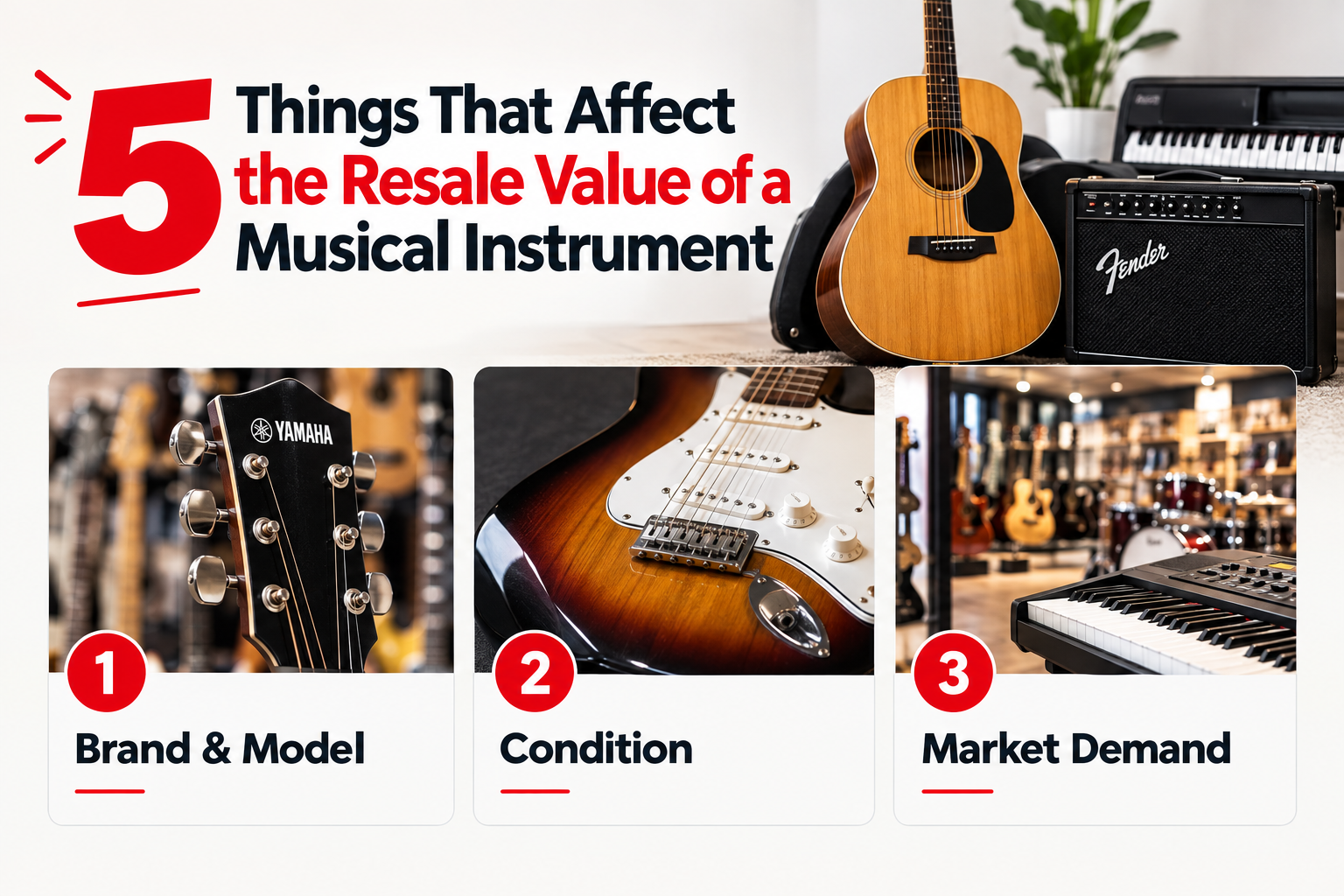
5 Things That Affect the Resale Value of a Musical Instrument
Sep
When selling a used musical instrument, the price is rarely determined by age alone. Two instruments of the same model and age can have very different resale values depending on their condition, brand, demand, and history.
Here are 5 major factors that affect the resale value of a musical instrument:
1. Brand and Model
The brand and specific model can have a significant impact on resale value.
Well-known brands with strong reputations often retain value better because buyers already trust their quality and availability of spare parts. The specific model also matters—some models are more sought-after in the used market than others.
2. Overall Condition
Condition is one of the biggest factors buyers consider.
An instrument that is clean, properly maintained, and fully functional will generally attract more interest than one with scratches, broken parts, rust, electronic faults, or structural damage.
For guitars, for example, buyers may inspect the neck, frets, bridge, tuning machines, electronics, and body before deciding what they are willing to pay.
3. Age and Usage
Age doesn’t automatically mean an instrument has little value.
A well-maintained older instrument can sometimes be more desirable than a newer instrument that has been heavily abused. However, excessive usage, poor maintenance, and long-term neglect can reduce its resale value.
Keeping an instrument properly maintained can therefore help preserve its value over time.
4. Current Market Demand
Resale value is also affected by what buyers currently want.
A particular keyboard, guitar, drum set, amplifier, or other instrument may have strong demand at one point and slower demand later. Availability of the model, current retail prices, new versions, and changing musical trends can all influence what buyers are willing to pay.
5. Accessories, Original Parts and Documentation
What comes with the instrument can make a difference.
Original cases, bags, power adapters, pedals, cables, stands, manuals, receipts, and other genuine accessories can make a used instrument more attractive to buyers.
Replacing damaged parts with quality components and keeping evidence of repairs or servicing can also give potential buyers greater confidence.
Before You Sell Your Instrument
If you’re planning to sell a used instrument, don’t simply choose a price based on what you originally paid.
Consider:
- The current price of a new one
- The instrument’s actual condition
- Its brand and exact model
- Current demand
- Included accessories
- Any repairs or modifications
- Prices of similar used instruments
At Marvin Empire, used musical instruments can also be evaluated for potential purchase, depending on the instrument, condition, model, and market value.
👉 Click Marvin Empire for a free consultation – Quick response, Pickup or Same-day delivery
