

The trumpet consists of several key structural and functional parts that work together to produce and shape sound. [1]
Main Parts and Functions
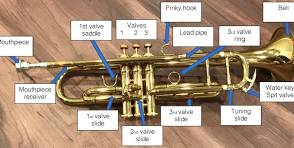
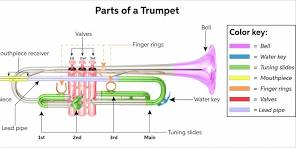
- Mouthpiece: A small, detachable funnel where the player places and buzzes their lips to create the initial sound vibration. [1, 2, 3]
- Mouthpiece Receiver: The small sleeve at the beginning of the instrument that securely holds the Mouthpiece and transfers lip vibrations into the horn. [1, 2]
- Leadpipe: The initial tube that channels air and sound vibrations from the receiver directly into the main tuning slide and valve assembly. [1, 2]
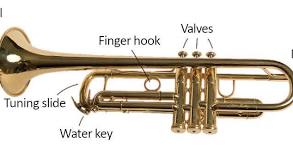
- Main Tuning Slide: A movable, C-shaped section of tubing that allows the player to adjust the overall pitch of the trumpet by pushing it in or pulling it out. [1, 2, 3]
- Valves (Pistons): Three mechanical cylinders operated by finger buttons that route air through extra loops of tubing to change the instrument’s pitch.
- Valve Casings: The vertical metal cylinders that house the moving valve pistons. [1, 2]
- Finger Buttons: The top caps pressed by the player’s fingers to move the pistons inside the casings. [1, 2]
- Valve Slides (1st, 2nd, and 3rd Slides): Small tuning slides attached to each valve that fine-tune specific valve combination pitches and allow for micro-intonation adjustments. [1, 2, 3]
- Water Key (Spit Valve): A small spring-loaded valve with a pad that lets the player release accumulated moisture and condensation from inside the instrument. [1, 2, 3]
- Bell: The wide, flared opening at the very end of the trumpet that amplifies the sound waves, projects them outward, and defines the instrument’s unique tone color. [1, 2, 3]
- Finger Hook / Slide Ring: Ergonomic loops or hooks (often on the 1st or 3rd valve slides) that help stabilize the player’s grip and allow manual adjustment of slide lengths while playing. [1, 2]
